Chalkbeat dug into exclusive new data that shows teacher turnover was not just a short-lived disruption from the COVID-19 pandemic. In many places, more teachers have been leaving the classroom for the past four to five years, with real consequences for schools, students, and the educators who remain.
Read Article
Population Studies and Training Center
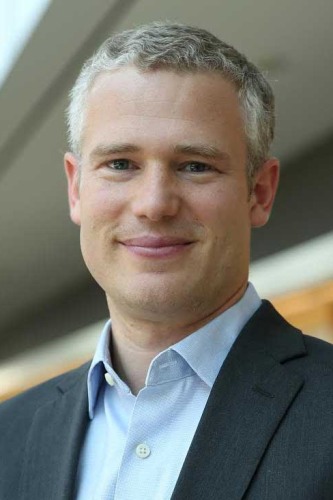
Matthew Kraft
Professor of Education and Economics
Research Interests
Economics of Education, Education policy analysis, School organizational capacity, Teacher effectiveness and evaluation, Teacher-parent communication
Affiliated Department
Department of Education
Biography
Matthew Kraft joined Brown University in 2013 and the PSTC in 2015. His research and teaching interests include the economics of education, education policy analysis, and applied quantitative methods for causal inference. Kraft studies human capital policies in education with a focus on teacher effectiveness and organizational change in K-12 urban public schools. He has published on topics such as teacher coaching, teacher layoffs, teacher-parent communication, teacher professional growth, school working conditions, and extended learning time.
In 2015, Kraft was named a William T. Grant Scholar for his 5-year research project, Teacher Effects on Students’ Non-Cognitive Competencies: A Study of Impacts, Instruction, and Improvement. The American Educational Research Association (AERA) selected his article with co-author John Papay on the relationship between professional school environments and teacher development for the 2014 Palmer O. Johnson Memorial Award.
Publications
Papay, J.P. & Kraft, M.A. (2o15). Productivity returns to experience in the teacher labor market: Methodological challenges and new evidence on long-term career improvement. Journal of Public Economics, 130: 105-119.
Kraft, M.A. & Papay, J.P. (2014). Do supportive professional environments promote teacher development? Explaining heterogeneity in returns to teaching experience. Educational Evaluation and Policy Analysis.36(4), 476-500.
Kraft, M.A. & Dougherty, S.M. (2013). The effect of teacher-family communication on student engagement: Evidence from a randomized field experiment. Journal of Research on Educational Effectiveness, 6(3), 199-222.
Recent News
The College Investor
Study Confirms More Hours In School Raises Student Achievement — With One Catch
In a finding that will shock absolutely no parent (and any rationale human being), a new review of 74 scientific studies has concluded that students who spend more time in school tend to score higher on tests than students who spend less time in school.
Read Article
Students who attend schools near data centers are more likely to see their math performance decline than those who don’t. Attending school near noisy airports is also associated with declines in math scores.
Read Article
Ed Choice
The Importance of Teacher-School Fit
A new paper by Matthew Kraft, John Papay, Jessalynn James, and Manuel Monti-Nussbaum goes out of the realm of the fictionalized and looks at real world efforts to move high performing teachers into low performing schools.
Read Article
Millions of U.S. students attend a school close to a contaminated environmental site associated with an increased risk of cancer, birth defects and other negative health outcomes – with students of color disproportionately enrolled in these schools.
Read Article
In 2009, the federal government launched a remarkable educational experiment. Effective teachers were paid large bonuses ($30,000, adjusted for inflation, over two years) to move into a low-performing, high-poverty school.
Read Article